
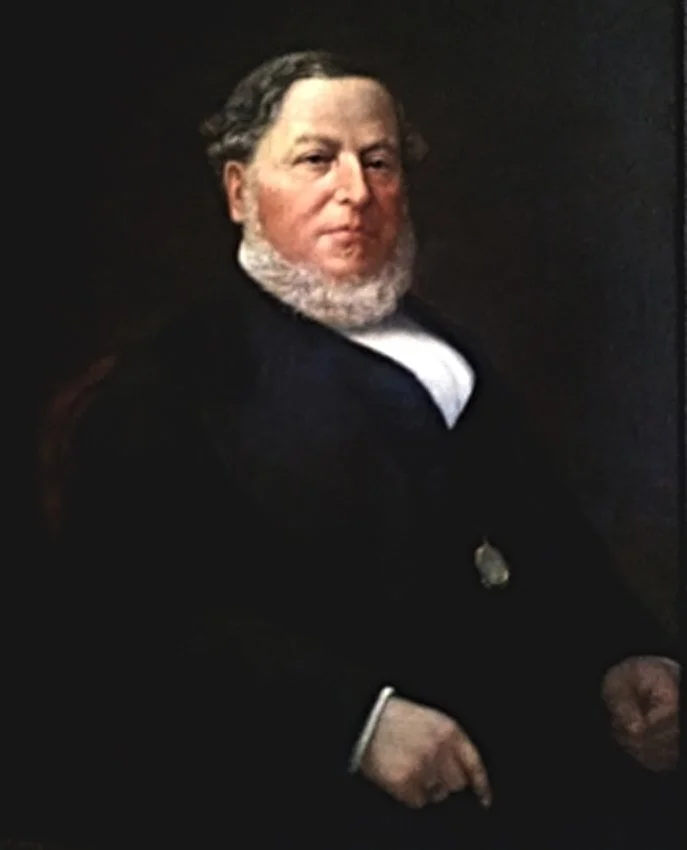
Isaac Moses Marsden
1808–1884
Retail Pioneer | Founder of E. Moses & Sons
A Retail Revolution
E. Moses & Sons was one of the leading, if not the pre-eminent, men’s clothing retailers of the 19th century. Founded in 1829 with a shop in Houndsditch, the business quickly expanded, moving to much larger premises in Aldgate by 1832. At the time, it became the largest clothing outlet in England.
The company continued to innovate, opening four more branches across the country and introducing pioneering retail features. They were among the first to use plate glass windows for displays and constructed large glass atriums to flood their sales floors with natural light - creating an inviting and modern shopping experience. Extended trading hours were also made possible with the introduction of gas lighting.
With the invention of the Singer sewing machine, E. Moses & Sons dramatically increased production while reducing costs - helping them live up to their slogan of serving both “Man and Servant” at moderate and affordable prices.
He retained a resident poet to provide amusing anecdotes with all his invoices and advertised widely in the many journals of the day, and was very evident at the 1851 Great Exhibition. As the Empire expanded he offered the early version of “mail order” to the many migrant families of the Empire but particularly Australia.
In the earlier years the family grew their business similarly in the Midland cities. There was a further step change at the time of the Great Exhibition as the pace of innovation quickened and the Singer sewing machine became available . He patented a reversible waistcoat for the gentleman who might need a fresher offering, or a change of colour while out and about.
From the late 1850s, Isaac began investing in London property. In 1860, he made a bold move - purchasing the freehold of Lord’s Cricket Ground from the Eyre Estate at auction for £5,910, selling it in 1866 for £18,000 to the Marylebone Cricket Club, the MCC as it now is. Today, his portrait hangs in the Committee Room at Lord's with William Nicholson, who provided the money, in recognition of this pivotal act, which allowed MCC to establish itself as the global custodian and arbiter of cricketing laws.
Family Life
The Moses family arrived in Britain in the mid-1700s from Alsace via Holland. Elias Moses, Isaac’s father, was born in Bungay on 4th April 1783 and his father, Isaac, had indeed been there before that time, with the earliest record being the payment of rates in the local church on his silversmith shop on 29th September 1780. Isaac Moses, was born in 1808, and in 1865, the family added the name Marsden — taken from a Yorkshire town where Isaac had business connections. This made them one of the first Jewish families to anglicise their surname, reflecting a broader trend of integration and adaptation in Victorian Britain.
Isaac’s personal life was as eventful as his business career. He married Rachel Hyam, with whom he had five children, before her early death. In 1845, he married Esther Gomes Silva, born in 1825 in Kingston, Jamaica, to a Sephardi family that had fled from Portugal. The couple were members of Bevis Marks Synagogue, and had 13 children together. As the family prospered, they moved to the prestigious 23 Kensington Palace Gardens, and Isaac became a founder member of the St Petersburg Place Synagogue. His eldest daughter Julia married Henry Beddington who proposed, and was a signatory, to the purchase of the land which is now the United Synagogue cemetery at Willesden.
Despite his many innovations and achievements, in retail, property, and philanthropy, Isaac’s business empire did not survive him. He died in 1884, and with him ended a remarkable era of entrepreneurial success.
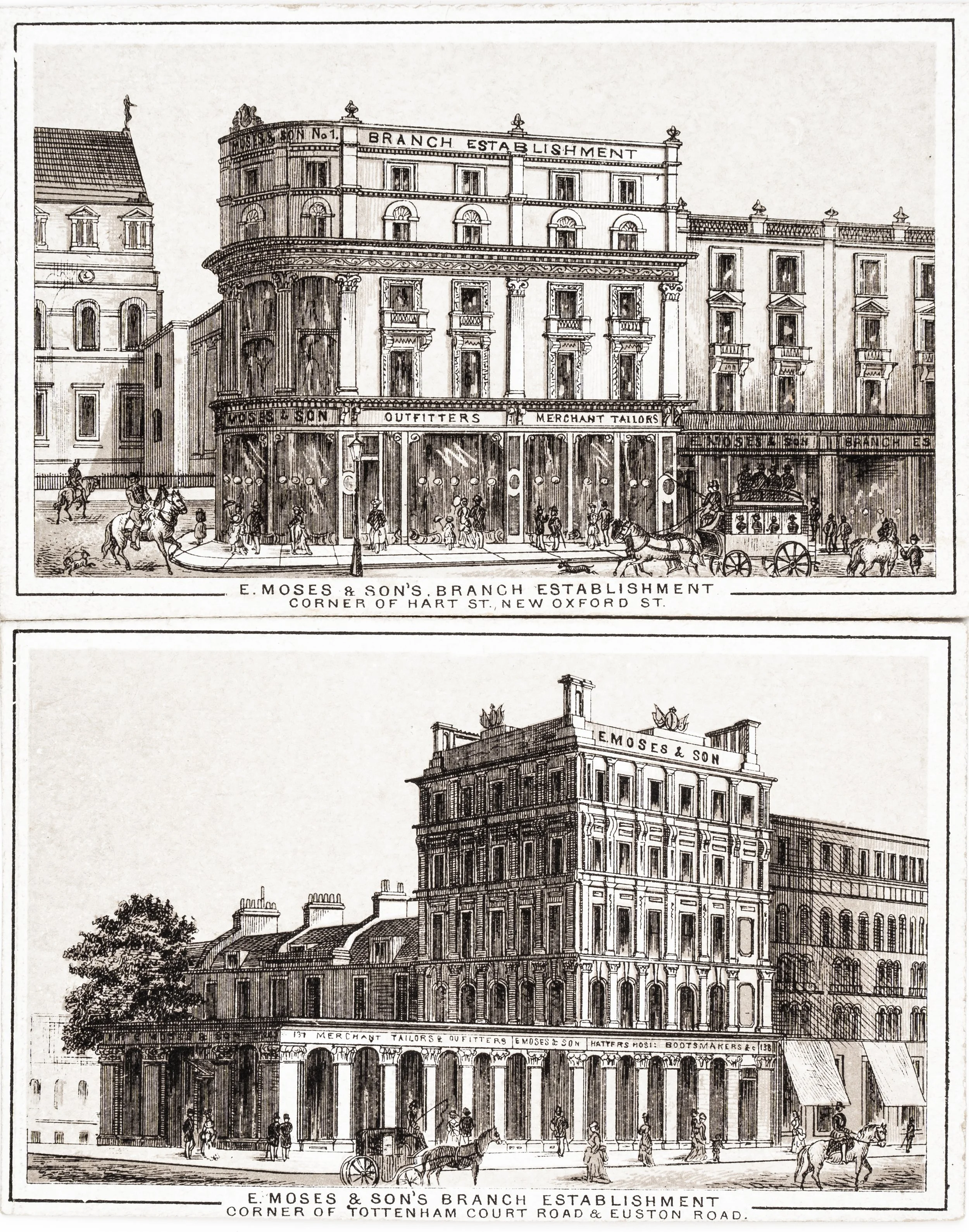
Department stores of E. Moses& Son’s